


You are not the only one asking how to read the Bible. And to be honest? Reading the Bible can feel intimidating at first.
You may open it with a sincere desire to know God better, but then wonder where to begin, how to understand what you are reading, or how to stay consistent when life gets busy. You may even ask, “Am I supposed to start from Genesis? What if I do not understand some passages? What book in the Bible teaches us how to live?”
The good news is that learning how to read the Bible is not about becoming perfect overnight. It is about building a relationship with God through His Word, one step at a time.
The Bible is not just a religious book. It is God’s inspired Word, written to reveal His nature, His will, His promises, His instructions, and His redemptive plan through Jesus Christ. As you read it with an open heart, you begin to see life differently. You gain wisdom, correction, comfort, direction, and strength.
This beginner-friendly guide will help you understand where to start reading the Bible, how to approach Scripture, how to finish the Bible in three months, six months, or one year, and how to apply God’s Word in everyday life.
Key Highlights
- The best way to read the Bible is with prayer, patience, and a desire to know God.
- Beginners can start with the Gospel of John, Mark, Proverbs, Psalms, or James.
- You do not have to understand everything at once; growth comes through consistency.
- The Bible should be read for relationship, not only information.
- Good Bible reading involves observation, understanding, reflection, and application.
- Scripture becomes more meaningful when you connect what you read to your daily life.
- The Holy Spirit helps believers understand and live out God’s Word.
- A simple reading plan can help you stay consistent without feeling overwhelmed.
- You can finish the Bible in three months, six months, or one year.
Why Reading the Bible Matters
Learning how to read the Bible matters because Scripture shapes how we see God, ourselves, and the world around us.
In 2 Timothy 3:16–17, Paul explains that all Scripture is inspired by God and useful for teaching, correction, training, and equipping believers for good works. This means the Bible is not only for church services or personal inspiration. It is for formation.
God’s Word teaches us what is true. It corrects wrong thinking. It trains our desires. God’s word strengthens our faith. It gives us wisdom for relationships, work, leadership, decision-making, and spiritual growth.
Romans 10:17 says faith comes by hearing the word of God. That means the more you expose your heart to Scripture, the more your faith has room to grow.
The Bible also helps us recognize God’s voice. God will never lead you in a way that contradicts His Word. So, the more familiar you become with Scripture, the easier it becomes to discern truth from confusion.
How to Read the Bible as a Beginner

The best way to read the Bible as a beginner is to start small, read consistently, pray for understanding, and focus on applying what you learn.
You do not need to read ten chapters a day to prove seriousness. You can start with one chapter, a few verses, or one short passage. What matters is that you read with attention and respond with obedience.
A helpful pattern is:
- Pray before reading.
- Read a short passage slowly.
- Ask what the passage reveals about God.
- Ask what it teaches about life, faith, obedience, or character.
- Write down one lesson.
- Apply one truth that day.
This keeps Bible reading practical and personal.
Where to Start Reading the Bible
Many beginners ask, “Where to start reading the Bible?” The answer depends on your current need, but there are a few books that are especially helpful for new readers.
Start with the Gospel of John
John is a beautiful place to begin because it focuses clearly on who Jesus is. It reveals His love, His miracles, His words, His sacrifice, and His invitation to eternal life.
John 20:31 explains that the book was written so people may believe that Jesus is the Christ, the Son of God, and have life in His name. If you are new to Scripture, John helps you start with the center of the Christian faith: Jesus.
Also read: God Is Love: What the Bible Means and How It Changes Us
Read the Gospel of Mark for a Simple Overview of Jesus’ Life
Mark is shorter and fast-paced. It shows Jesus in action: healing, teaching, serving, confronting evil, and giving His life for humanity. If you want a straightforward account of Jesus’ ministry, Mark is a good starting point.
Read Proverbs for Practical Wisdom
If you are asking, “What book in the Bible teaches us how to live?” Proverbs is one of the strongest answers.
Proverbs gives wisdom for speech, discipline, relationships, work, money, anger, humility, and decision-making. It helps you see that godly wisdom is not abstract. It affects everyday choices.
Proverbs 3:5–6 teaches us to trust in the Lord with all our heart and not lean on our own understanding. That is not just a memory verse; it is a life principle.
Read Psalms When You Need Comfort and Language for Prayer
Psalms teaches you how to bring your emotions before God. You will find worship, grief, repentance, joy, fear, hope, and gratitude in the Psalms.
If you are in a difficult season, Psalms can help you pray honestly while still anchoring your heart in God’s faithfulness.
Read James for Practical Christian Living
James is direct, simple, and practical. It teaches about trials, wisdom, faith, speech, humility, prayer, and obedience.
If you want to understand how faith should affect your actions, James is a powerful book to study.
Do You Have to Start from Genesis?
No, you do not have to start from Genesis if you are just learning how to read the Bible.
Genesis is important because it explains creation, the fall, covenant, family lines, and the beginning of God’s redemptive plan. However, some beginners may find it easier to start with Jesus in the Gospels before going back to the Old Testament.
A good beginner reading path could be:
- John
- Mark
- James
- Proverbs
- Psalms
- Genesis
- Romans
- Acts
This gives you a healthy mix of Jesus’ life, practical wisdom, prayer, beginnings, salvation, and the early church.
Read the Bible with Prayer
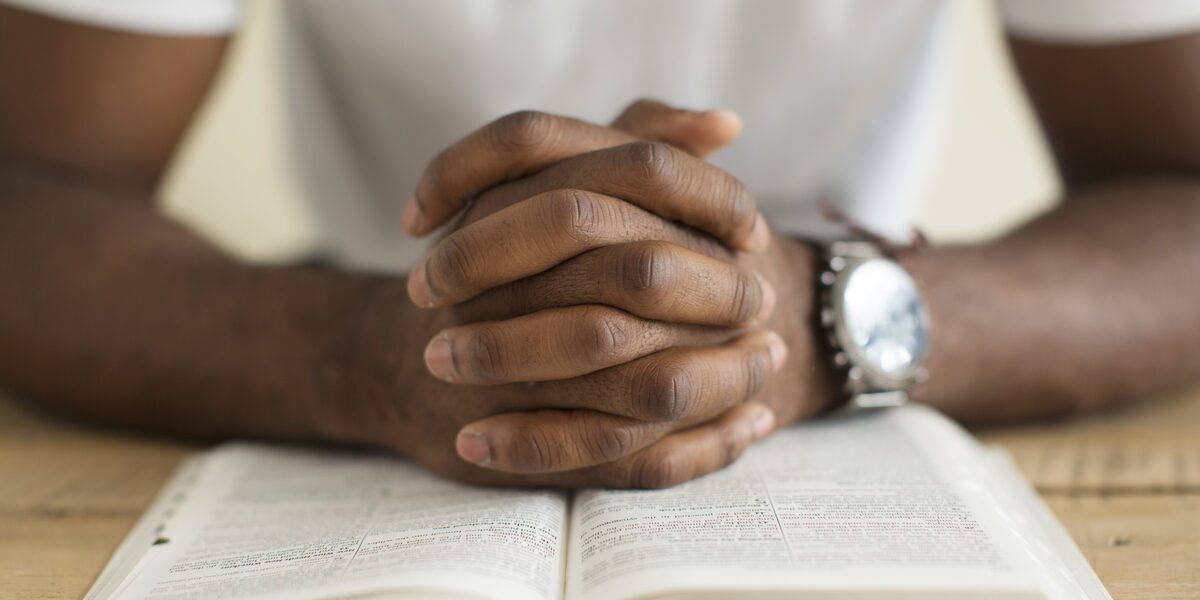
Before you read, pray.
Psalm 119:18 says, “Open my eyes, that I may behold wondrous things out of your law.” That is a powerful prayer for Bible study.
You can simply say:
“Lord, help me understand Your Word. Teach me what You want me to see. Give me a humble heart to obey You.”
Prayer reminds you that Bible reading is not only an intellectual activity. It is spiritual. You are not just studying words on a page. You are positioning your heart before God.
The Holy Spirit helps believers understand Scripture and apply it correctly. Jesus said in John 14:26 that the Holy Spirit would teach and remind His followers of His words. That means you are not reading alone.
Also read: The Armor of God: Bible Verse, Meaning, and How to Apply It
Read Slowly and Thoughtfully
One common mistake beginners make is rushing through the Bible just to complete a plan.
Reading the Bible is not a competition. The goal is not merely to finish chapters. The goal is transformation.
When you read, slow down enough to notice what the passage is saying. Pay attention to repeated words, commands, promises, warnings, and examples.
Ask simple questions:
- What does this passage say?
- What does it show me about God?
- What does it reveal about people?
- Is there a command to obey?
- Is there a promise to trust?
- Is there a warning to take seriously?
- How should this shape my life today?
These questions can turn a short reading into a meaningful encounter with God’s Word.
Understand the Context
Context helps you avoid misunderstanding Scripture.
Before applying a verse, ask where it appears in the Bible. Who is speaking? Who is being addressed? What is happening? Is the passage poetry, history, prophecy, wisdom, a letter, or a Gospel narrative?
For example, Proverbs should often be read as wisdom principles. Psalms often express prayer and worship. The Gospels reveal the life and teaching of Jesus. Paul’s letters address churches and believers dealing with real issues.
Understanding context does not mean you must become a Bible scholar before you read. It simply means you should avoid pulling verses out of place.
A study Bible, Bible dictionary, sermon notes, or trusted teaching can help you understand difficult passages.
Look for Jesus in Scripture
The Bible is not a random collection of inspirational thoughts. It tells one grand story of God’s creation, humanity’s fall, God’s covenant promises, Israel’s story, Jesus’ coming, His death and resurrection, the birth of the church, and the hope of restoration.
Jesus told people in John 5:39 that the Scriptures testify about Him. This means we should read the Bible with an awareness of God’s redemptive plan.
When you read the Old Testament, look for God’s holiness, faithfulness, justice, mercy, promises, and preparation for Christ. When you read the New Testament, look at how Jesus fulfills God’s plan and teaches us how to live as His people.
Apply What You Read
Bible reading becomes fruitful when it moves from information to obedience.
James 1:22 warns believers not to be hearers only, but doers of the Word. This is important because it is possible to know verses without allowing those verses to shape your character.
After reading, ask: “What is one thing I can practice today?”
If you read about forgiveness, forgive someone. If you read about generosity, look for a way to give. Did you read about patience? Practice patience in traffic, at work, or at home. If you read about purity, adjust your boundaries. If you read about faith, trust God with the situation you have been trying to control.
The Bible is not only meant to be admired. It is meant to be lived. In fact, it contains practical priciples through which we can obtain the promises of God. This teaching below will teach you how the word of God leads us to our inheritance.
Keep a Bible Journal
A Bible journal can help you remember what God is teaching you.
You do not need anything complicated. You can write:
- Date
- Passage read
- Key verse
- What I learned about God
- What I learned about myself
- One action step
- Prayer response
Writing slows you down. It also gives you a record of your growth. Over time, you may look back and see how God has been shaping your heart through His Word.
Use a Simple Bible Reading Plan
A Bible reading plan helps you stay consistent. But choose one that fits your season.
If you are just starting, do not begin with a plan that makes you feel guilty by day three. Start with something realistic.
Here is a simple 30-day beginner plan:
Week 1: Meet Jesus
Read John 1–7.
Focus on who Jesus is, what He says, and how people respond to Him.
Week 2: Keep Following Jesus
Read John 8–14.
Notice His teachings, His compassion, His authority, and His promise of the Holy Spirit.
Week 3: The Cross and Resurrection
Read John 15–21.
Pay attention to Jesus’ death, resurrection, and restoration of His disciples.
Week 4: Practical Christian Living
Read James 1–5 and selected Proverbs.
Ask how your faith should affect your words, decisions, relationships, and daily habits.
This kind of plan gives you structure without overwhelming you.
A Simple Plan to Finish Reading the Bible
One reason many believers struggle with Bible reading is that the Bible feels too large to finish. But when broken into manageable daily portions, reading the entire Bible becomes much more achievable than most people think.
The traditional Protestant Bible contains:
- 929 chapters in the Old Testament
- 260 chapters in the New Testament
- 1,189 chapters in total
It also contains more than 31,000 verses, with Psalm 119 being the longest chapter and Psalm 117 the shortest.
While that may sound overwhelming at first, consistent daily reading can help you complete the Bible within a realistic timeframe.
Here are a few simple reading rhythms you can follow:
To Read the Bible in One Year
- Read 3 chapters daily
- Read 5 chapters on Sundays
With this pace, you can finish the entire Bible in one year without feeling rushed.
This is one of the most sustainable approaches for beginners because it allows you to build consistency while still having time to reflect on what you are reading.
To Read the Bible in Six Months
- Read 6 chapters daily
- Read 10 chapters on Sundays
If you want a more intensive approach, this schedule helps you complete the Bible in about six months.
This works well for believers who already have a consistent devotional lifestyle and want deeper immersion in Scripture.
Read the Bible in Three Months
- Read 12 chapters daily
- Read 20 chapters on Sundays
This is a more disciplined reading plan for people who want to move through Scripture quickly within a shorter season.
However, it is important to avoid turning Bible reading into a race. The goal is not merely to complete chapters, but to encounter God through His Word and allow Scripture to shape your heart and daily life.
You do not have to choose the fastest plan. Choose the one you can remain consistent with. Over time, steady engagement with Scripture produces spiritual growth, wisdom, discernment, and maturity.
Also read: Friendship in the Bible: What God Teaches About Choosing the Right Friends
Common Mistakes to Avoid When Reading the Bible
Reading Only When You Feel Like It
Feelings change. Spiritual growth requires consistency.
There will be days when you feel hungry for Scripture and days when you feel distracted. Build a rhythm that does not depend only on emotion.
Even ten focused minutes a day can make a difference over time.
Reading Without Applying
It is possible to read a chapter and forget it immediately. Application helps the Word take root.
Before you close your Bible, choose one truth to carry into your day.
Picking Verses Without Context
A verse can be true, but still misunderstood when removed from its setting.
Read the surrounding verses. Ask what the passage meant first before asking how it applies now.
Expecting to Understand Everything Immediately
Some parts of the Bible are simple. Others require deeper study. Do not be discouraged when you meet difficult passages.
Keep reading. Ask questions. Use reliable resources. Speak with mature believers. Growth takes time.
Treating the Bible Like a Rulebook Only
The Bible contains commands, but it is more than a list of rules. It reveals God’s heart, God’s ways, God’s promises, and God’s plan through Christ.
Read it to know God, not merely to collect instructions.
How to Stay Consistent in Bible Reading
Choose a regular time and place.
It could be early morning, lunch break, evening, or before bed. What matters is creating a rhythm you can sustain.
Keep your Bible accessible. Use a notebook. Remove distractions where possible. Start small. If you miss a day, do not quit. Continue the next day.
You can also read with a friend, small group, or church community. Sometimes accountability helps you stay steady.
A Simple Method for Reading Any Bible Passage
Use this four-step method:
1. Observe
What does the passage say?
Look for people, places, repeated words, commands, promises, and key events.
2. Understand
What does the passage mean?
Think about context. Ask what the writer is communicating and how it fits into the larger message of Scripture.
3. Reflect
What is God showing me?
Let the Word examine your thoughts, motives, fears, habits, and desires.
4. Apply
What should I do?
Choose one practical response. Obedience turns reading into transformation.
Frequently Asked Questions on how to Read the Bible
If you read 3 chapters every day and 5 chapters on Sundays, you will finish the Bible in one year
If you read 6 chapters every day and 10 chapters on Sundays, you will finish the Bible in six months
But if you read 12 chapters every day and 20 chapters on Sundays, you will finish the Bible in three months
The traditional Protestant Bible has 66 books in total: 39 books in the Old Testament and 27 books in the New Testament.
The Old Testament contains 929 chapters, while the New Testament contains 260 chapters. In total, there are 1,189 chapters in the Bible.
There are 23,145 verses in the Old Testament and 7,957 verses in the New Testament. In total, there are 31,102 verses in the Protestant Bible (commonly used in Baptist, Anglican, and Pentecostal churches).
Conclusion
Learning how to read the Bible is one of the most important steps in your spiritual growth.
You do not need to know everything before you begin. In fact, you do not need to read perfectly. You only need a willing heart, a simple plan, and a desire to meet God through His Word.
Start with Jesus. Read slowly. Pray for understanding. Ask good questions. Apply what you learn. Keep showing up.
Over time, Scripture will renew your mind, strengthen your faith, correct your path, and help you become more like Christ.
Reflection / Action Step
Choose one book of the Bible to begin this week. If you are unsure, start with the Gospel of John.
Read one chapter a day for the next seven days. After each reading, write down one thing you learned about God and one step of obedience you will take that day.
For more insightful spiritual pieces, stay connected to our blog. If you’d like fresh spiritual content daily, connect with our Lead Pastor, Bolaji Idowu on the various platforms below:
- Instagram – @bolajiid
- Facebook – @Pastor Bolaji Idowu
- TiTok – bolajiid1
- X (formerly Twitter) – @pastorbolaji
If you have questions or contributions on the topic discussed, feel free to use the comments section.
Recommended
- How to Hear God’s Voice Clearly: A Practical Biblical Guide
- Spiritual Disciplines for the Christian Life: Practices That Help You Grow
- Prayer for Strength: How to Find Courage When Life Feels Heavy
- What Is Intercessory Prayer? Meaning, Examples, and How to Pray for Others
- Prayer of Thanksgiving | 30 Powerful Examples, Bible Verses & How to Pray Effectively
